

Method Actor's Guide to an Authentic Life
Humanity is transitional by nature, and I love watching it unfold

The performativity of life has always been one of my obsessions. I dare to argue we’re are all performing. For freedom, survival, some simply for the chance to try on another skin.
I learned this early, standing under dusty spotlights on makeshift school stages, reciting lines I barely understood yet somehow felt to the bone. I was a theater kid, which is just another way of saying I was obsessed with the possibilities of becoming.
What draws me to people to this day is the freedom in expression, and refusal to ever conform to a role given to them. An openness to shifting, experimenting, expressing. The kind of authenticity that isn’t about declaring, “This is who I am, fixed forever,” but about saying, “This is who I am today, and tomorrow, I may choose again.”
Humanity is transitional by nature, and I love watching it unfold in real time.
We talk too much about authenticity as if it were rigid, static, a single truth nailed down. But maybe we should talk more about expression in playing with the masks we wear, about leaning into the performance of our characteristics, about the courage to explore possibilities without apology.
Growing up, I despised the ready-made expectations handed to me: how a girl should behave, how ambition should disguise itself, how success should sound. Conformity felt like an allergy. Performance gave me another option, not just to escape, but to invent. It allowed me to bend perception toward what felt true, even when “truth” was still shifting beneath me.
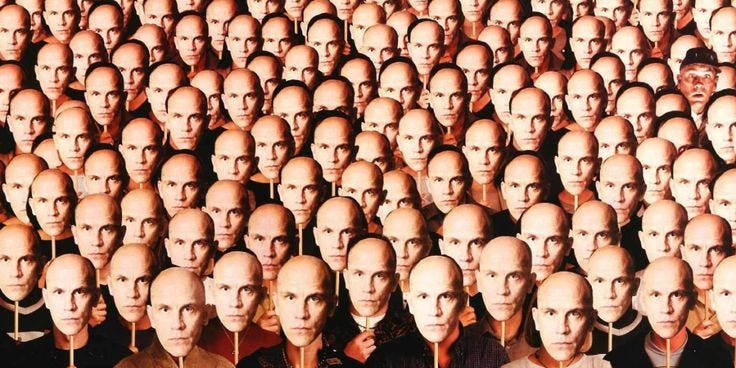
Because no one ever has the whole picture. That’s the beauty of lived experience. We create characters not to hide, but to reveal the many sides of ourselves that can’t be contained in a single role. Some days I’m the girl walking like I own the set; other days I’m quiet, tucked into denim, daydreaming and rewriting stories in my head. There’s no final version. Just shifting roles, recast again and again by mood, curiosity, season, and need.
Performance, when done with intention, is fluid. It reinvents the plot entirely. So the question isn’t whether we perform. It’s how to perform a life that feels like our own.
How to Perform a Life That’s Yours
1. Design your set
Every story has a setting. Pay attention to what makes yours feel like you; the routines, the environments, moments, the colors, textures, rhythms that anchor you. It’s not just clothes or furniture but emotional weather, the soundtrack of your days, the pace of your steps. Curate your environment like a director, intentionally and vividly. And don’t fear change, the set can be rebuilt between acts.
2. Don’t edit mid-scene
Perception is a thief. If you adjust your performance to every frown in the front row, you’ll lose the thread of your own script. Let the act play out. Trust your timing. The right audience will hear it when they’re ready.
3. Recast your roles
Hate your barista job but dream of sales? You’re already in practice pitching products, reading people, building loyalty. Stuck in data entry but long to be a writer? You’re already building the essential skills. Every document you organize, every report you structure, and every email you draft is practice in clarity and communication. Find ways to rewrite the narrative and tell it to the world. The language you use shapes the role itself. Rewrite the script in your head, then embody it until the world catches up.
4. Build meaningful conflict.
Stories without obstacles collapse. Ask yourself: what are you resisting? What voices or systems are you determined to challenge? Who or what is your villain? Don’t avoid conflict. Let it sharpen your values. It gives your story teeth.
5. Leave space for the second act.
A scene that flops isn’t the end of the play. Transformation lives in pivots. Ask: what shifted? What was shed? What remains? Artistry isn’t perfection, it’s reinvention.
The stage is never empty, not mine, not yours. I’ve learned to watch people in their own productions:
The girl who grew up under heavy judgment, now curating safety through polished photos and careful captions. Her act is algorithm-friendly, but what she’s performing isn’t freedom, it’s protection. Behind the curtain, there’s more of her waiting, longing for a stage where belonging doesn’t cost her softness.
The man who was invisible as a child, now standing on a stage he clawed his way onto. He performs authority so flawlessly he’s forgotten humor, forgotten vulnerability. He clings to control because letting go might cost him the applause he spent a lifetime chasing.
And I get it. I’ve done it too.
Perform a role too well, and it starts leading you. You forget which parts were costume and which were skin. You become a polished version of a self that no longer exists, smiling on cue, dying off-script.
The ultimate goal is to perform with intention. By staying grounded in who you are, you can use performance as a tool for self-discovery and expression, not a mask to hide behind.
This kind of intentional performance can lead to new realities and opportunities, pushing you to discover what lies beyond your current understanding. That's the beauty of the process.
Use this power to express yourself freely, not out of fear of nonconformity. The point is to fully live, not to shrink.
We live in a culture obsessed with authenticity, as if being human could ever be singular, static, or fully known. But performance done with awareness, courage, and play isn’t the opposite of truth. It’s its evolution. It’s how we give form to what we feel before we even have the words.
Not everyone will understand your play. Some will leave at intermission. Some won’t catch the references. That’s fine. It was never meant for everyone.
Never thought I would love this kind of topic. Love it❤️
This was so good 🤍